
Some pets love travelling to new destinations for camping, hiking, swimming in the sea, or chilling near a river. Some even like to travel with their guardians on motorbikes! Some pets hate anything that takes them out of their comfort zone.
Unfortunately, travel might be inevitable. It’s important to prepare your pets for transport, be it plane, train, or automobile. You need to recognise your pet’s stress signals, so you can adapt your prep work and not push them too fast.
However, the best prep in the world can crumble in circumstances where even bomb-proof dogs go to pieces, like turbulence on a plane. It’s essential to know your pet, so you can take steps to mitigate stress and ensure they remain comfortable.
We’ll help you prepare your pets for travel and provide tips to recognise and address travel-related stress to keep them calm on their journey.
Common Signs of Stress in Pets
The following signs of stress apply largely to dogs, but hold true for most animals, although they might appear in different forms. Cats, for instance, might hide in a corner rather than pace, but their stress is just as real.
- Panting and whining: Most dogs will pant and whine in stressful situations, this can be compounded by motion sickness, especially during air travel.
- Scratching and barking: All modes of transport require some form of confinement. Animals don’t like confinement, so barking and scratching are common stress reactions.
- Restlessness and pacing: Restlessness is a big stress signal. Your dog might sit, stand, lie down, stand, turn around, lie down, and stand, etc.
Some dogs will do this for an entire trip (like 18 hours in a car) so they are shattered when you arrive. Ensure they have somewhere to decompress. - Excessive drooling of vomiting: Many animals drool when stressed, although, if paired with vomiting or retching, it could indicate motion sickness – which is still stressful.
- Loss of appetite or refusing to drink: Stress shuts down the digestive system, so expect loss of appetite. Refusing to drink is more serious because pets can end up dehydrated.
Dehydration can also result from heat stroke. On a scale of 1 – 10, where 10 requires immediate medical attention, symptoms (excessive panting, vomiting) are severe. Closer to one and you’re looking at unquenchable thirst, frequent drinking, whining, and scratching.
What Causes Stress in Pets During Transport?
Animals react to stress in different ways. It depends on their life experiences, personality, and breed. Be wary of relying too much on breed, however, some pugs love to travel more than happy-go-lucky labradors and some labradors can quake like overexcited Chihuahuas at the thought of getting in a car.
Typically, stress in pets is caused by:
- Unfamiliar environments: Animals are very sensory – far more so than people – so new sights, sounds, and smells can be particularly overwhelming.
- Separation from guardians: Pets get a lot of comfort from their guardians, so when they’re apart in very distressing situations, they can become anxious.
- Motion: The type of motion plays a role in motion sickness. For instance, a dog who is happy in a car might feel very sorry for herself on a bus or train.
- Confined spaces: Confinement makes animals feel unsafe because there are no escape options, so being trapped in a vehicle can be very stressful.
- Change in routine: Dogs like routine. It makes them feel comfortable to know what happens when, e.g., your dog reminds you that it’s supper time every day at 6 pm. Changes in routine are unpredictable and unpredictability robs them of control over their environment.
How to Reduce Stress During Travel
You can help your pet feel safe(r) and more comfortable, by doing the following prep work:
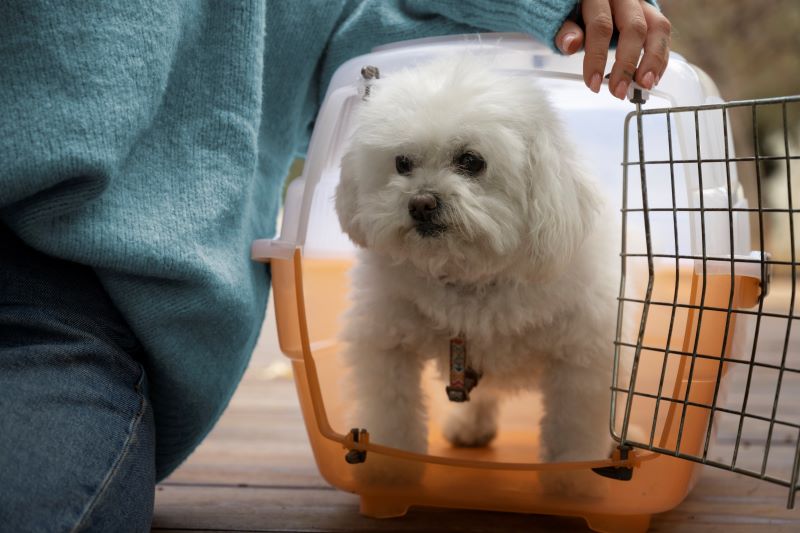
- Crate training: Crates provide comfort, partly because they provide manageable boundaries. Done correctly, crate training can turn crates into a place of safety. You know you’ve done a good job when your pet chooses her crate for a snooze or to eat her favourite snack.
- Comfort items: Having something familiar in their crate, like a favourite toy, blanket, or even one of your t-shirts, can provide much-needed reassurance during transport.
- Hydration: Dehydration can be pretty nasty, so take care to keep your pet hydrated during the journey. You can use the pet equivalent of electrolyte replacements to keep them hydrated.
- Breaks during travel: It’s highly recommended for people to take regular breaks during long trips. Use those breaks to let your dog out to sniff, walk, and pee. They’re tiny decompression breaks that can make all the difference to your pet on a long journey.
- Calming aids: Calming aids (sprays, pills, collars) can help dogs relax, but if your pet suffers from extreme anxiety during travel, talk to your vet about stronger alternatives.
It’s All About Preparation and Management
You need to put in the work if you know you’ve got a long trip coming up and your pets aren’t exactly sold on this transport thing. Start crate training several weeks beforehand. Remember, it takes some pets longer than others to accept crates.
Practice trips of increasing duration to help your pet get used to travel. Go somewhere fun, like a new hiking trail, beach, or camping trip, even a new picnic spot will do the trick. The idea is to associate travel with good stuff.
Don’t worry if you have to travel separately from your animal. Pets Travel specialises in transporting animals from Point A to your loving arms. Our qualified staff understand pets’ needs during travel and know how to keep them calm and comfy.